
Yeongwol in Gangwon-do is not just a travel destination with beautiful scenery, but a city where history, nature, and emotion are naturally intertwined. Recently, Yeongwol has been gaining more attention than before. It is said that after the success of the movie ‘The Man Who Lives with the King’ (왕과 사는 남자), numerous tourists have been visiting Yeongwol, focusing on Cheongnyeongpo and Jangneung Royal Tomb. Yeongwol is a travel destination where you can experience historical narratives alongside tranquil nature.
Yeongwol boasts several representative attractions, including Jangneung Royal Tomb, Cheongnyeongpo, Byeolmaro Observatory, Gossi Cave, Seondol Rock, and the Korean Peninsula-shaped terrain. Exploring these places together allows you to experience Yeongwol's atmosphere quite three-dimensionally. How about a travel itinerary where you leisurely walk in the footsteps of King Danjong during the day, admire the scenery created by the Donggang River, cliffs, and strange rocks in the afternoon, and gaze at the stars at night? Isn't Yeongwol a place that lingers longer in your memory the more slowly you stay, rather than rushing through a checklist-like trip?
Cheongnyeongpo and Jangneung Royal Tomb
The first place that comes to mind when traveling to Yeongwol is undoubtedly Cheongnyeongpo. Cheongnyeongpo is where King Danjong was exiled, boasting a unique topography surrounded by rivers on three sides, accessible only by ferry. In reality, it's more than just a historical site; the atmosphere created by the river, forest, and cliffs together is impressive. Knowing its historical significance makes it feel more profound, but even without any prior information, the scenery alone is memorable enough. Recently, with the influence of the hit movie ‘The Man Who Lives with the King,’ visitor numbers have surged, and during holidays, ticket sales close early due to high interest. If you're planning a visit during a holiday, it might be very crowded, so it's good to keep that in mind, right?
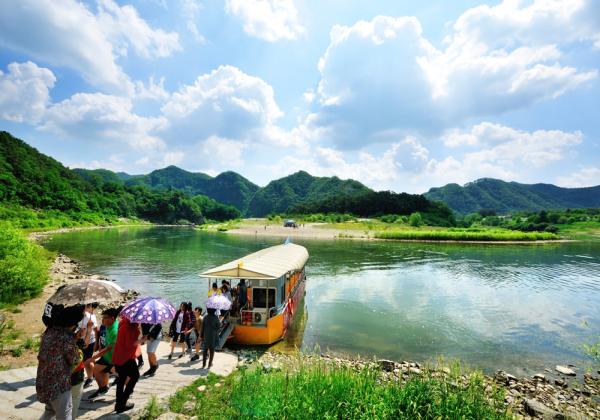
Cheongnyeongpo (Source - Yeongwol County Office)
A great place to visit along with Cheongnyeongpo is Jangneung Royal Tomb. Jangneung is the tomb of King Danjong, a highly symbolic place introduced as the first of Yeongwol's 10 scenic spots. King Danjong was dethroned by Grand Prince Suyang, and after a plan by loyal subjects to restore him to the throne was revealed, he was exiled to Yeongwol and passed away there. When Danjong died, no one dared to retrieve his body for fear of repercussions, but Eom Heung-do, a local official of Yeongwol, buried him. After King Jungjong, discussions arose in the court regarding rituals and a tomb for Danjong, and by the time of King Seonjo, a stone table, stele, stone lantern, and stone pillars were erected. In the 7th year of King Sukjong's reign (1681), Prince Nosan was elevated to Grand Prince Nosan, and in the 24th year of King Sukjong's reign (1698), he was posthumously restored to his royal title, and his tomb was named Jangneung (Source: National Heritage Portal).
Jangneung features well-maintained forest paths, making it ideal for a quiet stroll and a good place to calm your mind during your trip. The recent resurgence of interest in Yeongwol tourism is ultimately centered around Cheongnyeongpo and Jangneung, making these two places the core of a Yeongwol trip right now.

Jangneung Royal Tomb (Source - National Heritage Portal)
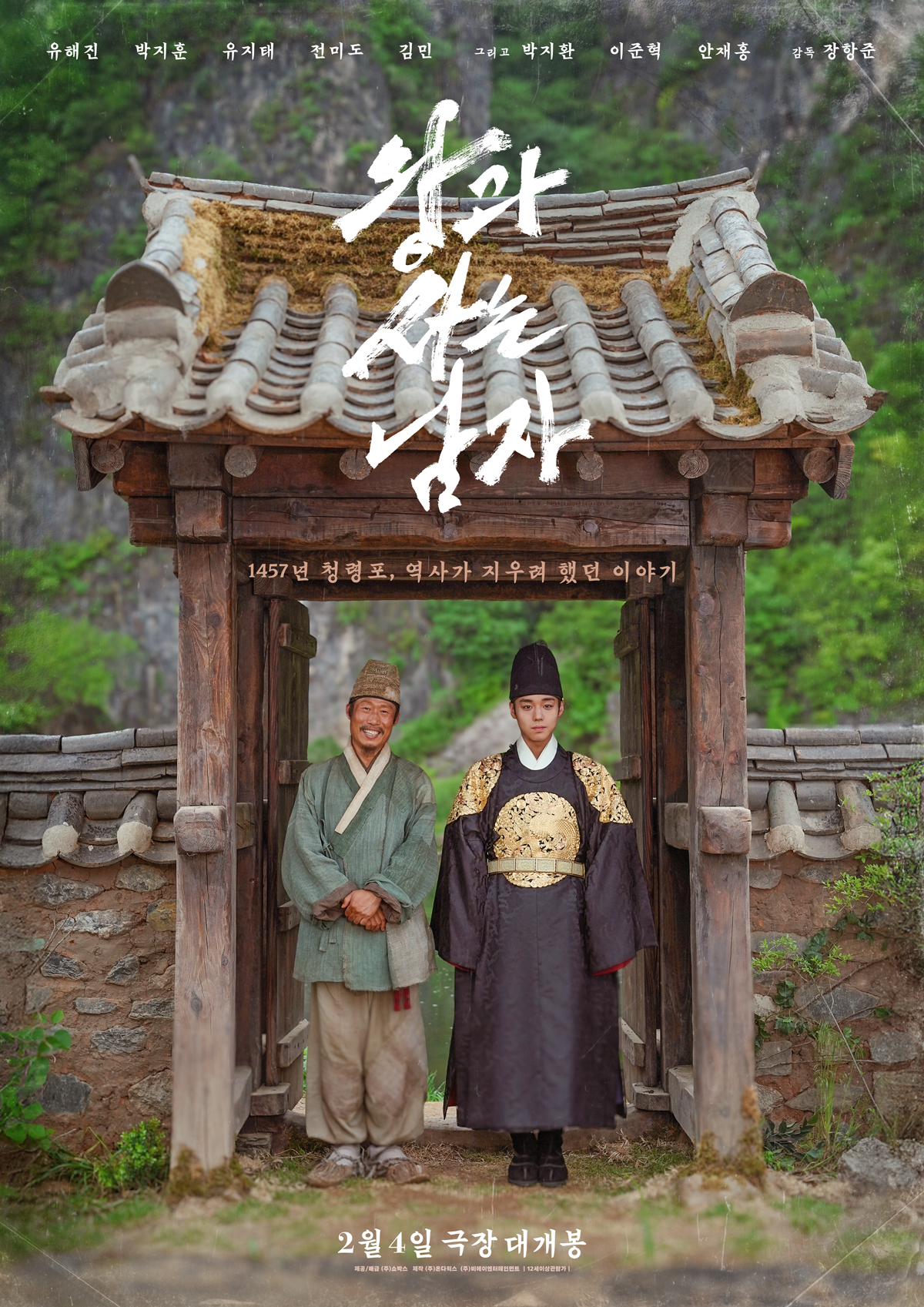
Source - Showbox
Korean Peninsula-shaped Island and Observatory
The fact that this city isn't just a place to see history and leave makes it even more attractive. The Korean Peninsula-shaped terrain is considered one of Yeongwol's representative natural landscapes. It was named because the terrain, formed by a winding river, resembles the shape of the Korean Peninsula, and the view from the observatory is quite impressive. This is a tourist destination that showcases unique scenery throughout all four seasons, a landform created by the erosion and deposition of the meandering Seogang River.
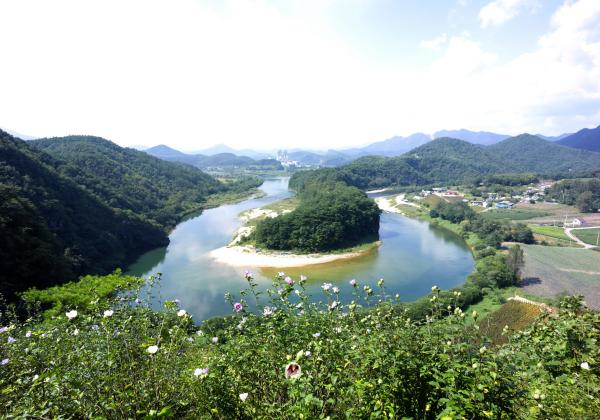
Korean Peninsula-shaped Terrain (Source - Yeongwol County Office)
Seondol Rock, another of the 10 scenic spots, is a rock about 70m high, located within the Seogang River where it forms a cliff. Seondol Rock has a shape as if a giant knife had split the cliff and then stopped. This place is great for taking photos because the scenery created by the rock, river, cliffs, and forest is so vivid.
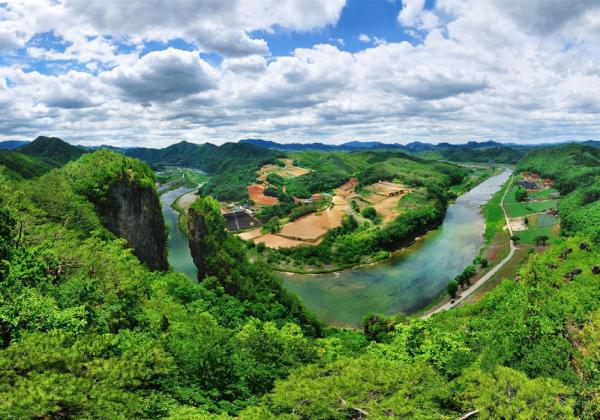
Seondol Rock (Source - Yeongwol County Office)
Another indispensable place in Yeongwol is Byeolmaro Observatory. Byeolmaro Observatory is an astronomical attraction located at the summit of Bongraesan Mountain, where the Donggang and Seogang Rivers meet. Its name itself, combining 'Byeol' (star), 'Maru' (summit), and 'Ro' (calm/quiet), perfectly matches the atmosphere of Yeongwol. Experiencing history and nature during the day, then gazing at the stars from the mountaintop at night, will make your Yeongwol trip much more complete. A day concluded by appreciating the stars will remain in your memory long after the trip.

Byeolmaro Observatory (Source - Yeongwol County Office)
If you desire a more diverse itinerary, visiting Gossi Cave or art spaces would also be a great experience. Yeongwol has well-organized themed travel routes, such as nature exploration, historical exploration, and museum-centric courses.
View Yeongwol's official recommended courses: https://www.yw.go.kr/map/index.html
For international tourists, Yeongwol is not at all difficult to access. The Yeongwol County Culture and Tourism website offers multilingual menus, and key tourist information numbers and services are well-organized. Yeongwol County also officially provides transportation services like tourist taxis, which can help travelers without their own cars plan their routes. It can be quite an attractive destination not only for domestic travelers but also for international visitors who wish to experience Korea's history and nature all at once.
Yeongwol's Food
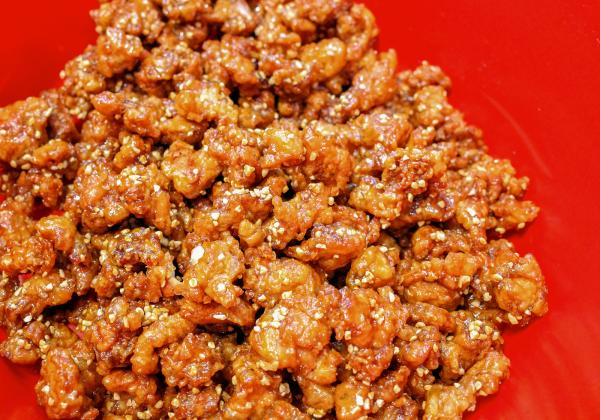
You can't leave out food when traveling, can you? While Yeongwol is widely known as a travel destination with beautiful scenery, people who have actually visited often say, "The joy of eating is surprisingly great." Yeongwol's representative dishes include Dakgangjeong (sweet and spicy fried chicken), Jeonbyeong (buckwheat crepes) and Buchimgae (pancakes), Trout Hoe (sashimi), Boribap (barley rice), Gondre Namul Bap (thistle rice), Daseulgi Haejangguk (freshwater snail soup), Chik Guksu (kudzu noodles), and Yeongwol Hanwoo (Korean beef). Yeongwol's food offerings are quite broad, ranging from market snacks to full meals and local specialty dishes.
Source - Yeongwol County Office
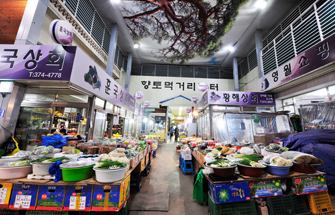
At the heart of Yeongwol's food scene is Seobu Morning Market. Yeongwol Seobu Morning Market, established in 1959, is still gaining attention for its traditional foods like buckwheat jeonbyeong, buckwheat jeon, and olchaengi guksu (tadpole noodles), alongside local agricultural specialties. For travelers wondering, "Where should I eat?" this market is the best place to visit first! Yeongwol is very famous for its Dakgangjeong. Dakgangjeong, a representative snack of Seobu Market, is a dish sought after by everyone from children to adults, thanks to its sweet and spicy sauce.
Source - Yeongwol County Office
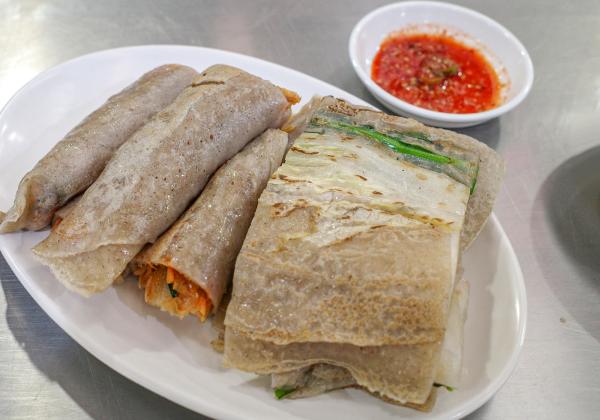
Along with Dakgangjeong, representative foods of Yeongwol are Jeonbyeong and Buchimgae. Jeonbyeong, made by wrapping kimchi in buckwheat dough, is characterized by its spicy and savory taste.
Source - Yeongwol County Office
In addition to these, there's Olchaengi Guksu (tadpole noodles), Susu Bukkumi (sorghum pancakes), and Buchimgae (pancakes)! Enjoy your trip with the diverse representative foods of Yeongwol Market. Rather than fancy or trendy stimulating dishes, you'll experience the rustic and comforting flavors unique to Gangwon-do's traditional markets.
Daseulgi Haejangguk (freshwater snail soup) is the dish that comes to mind when you want a hearty meal in Yeongwol. Freshwater snails are said to be good for liver function recovery and hangover relief. The Daseulgi Haejangguk restaurant across from Yeongwol Station is so popular that people line up to wait. Considering that Yeongwol is a region with rivers and valleys, you can understand why this dish is so characteristic of Yeongwol, right?
Besides these, Yeongwol's representative dishes are truly diverse, including Trout Hoe (sashimi), Boribap (barley rice), Gondre Namul Bap (thistle rice), and Chik Guksu (kudzu noodles).
Yeongwol's Representative Foods: https://www.yw.go.kr/tour/contents.do?key=813
Conclusion
Gangwon-do Yeongwol is less of a flashy travel destination and more of a place that slowly permeates our hearts. Its unique natural scenery, along with its historical stories, will remain in our memories for a long time. Yeongwol will not just be a place you've "visited once," but a place that subtly comes to mind again and again.
Yeongwol is a city steeped in old stories, yet at the same time, it can be said to be one of the most sensually enjoyable domestic travel destinations right now. If you are looking for a travel destination that is quiet but not boring, deep but not difficult, how about a trip to Yeongwol, Gangwon-do?

Source - Yeongwol County Office